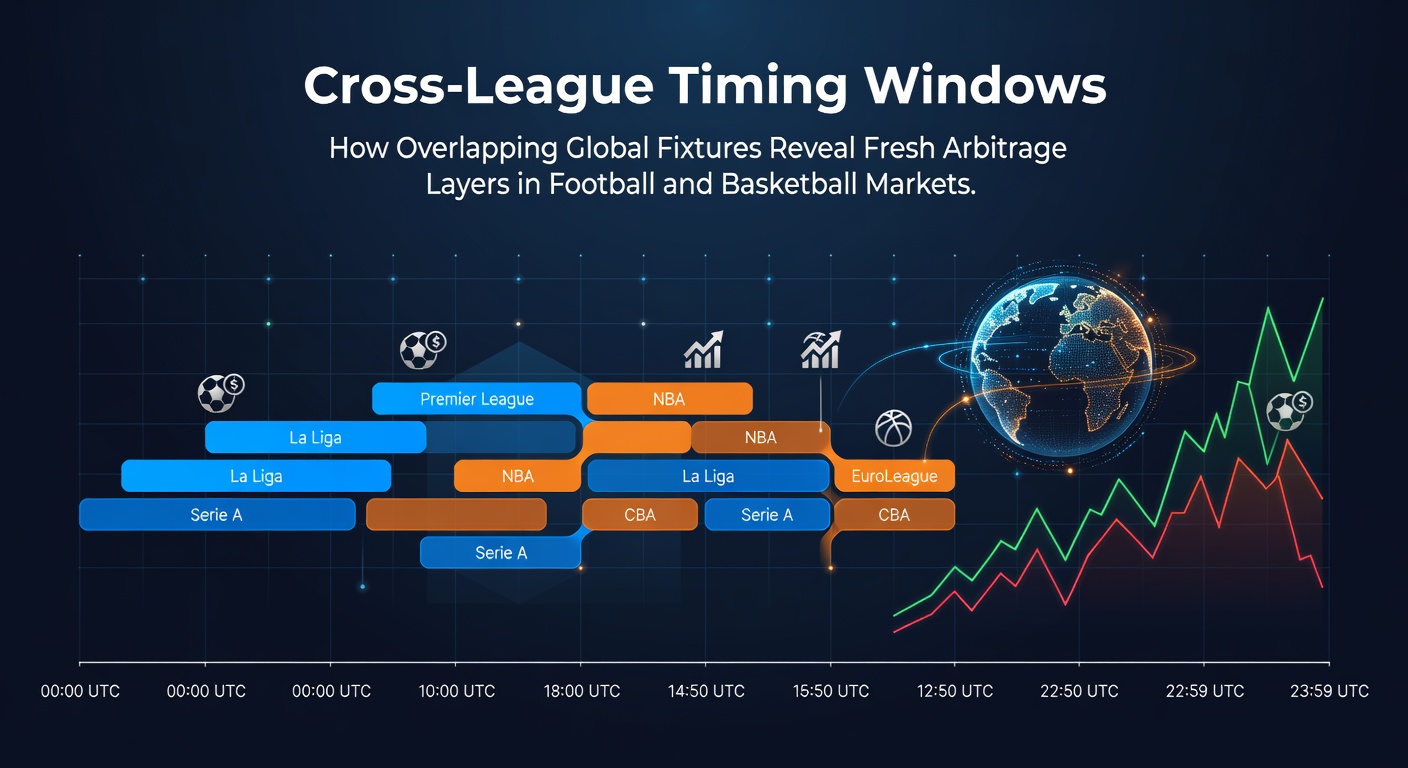
Cross-League Timing Windows: How Overlapping Global Fixtures Reveal Fresh Arbitrage Layers in Football and Basketball Markets
Global sports calendars create pockets where matches from different continents run simultaneously, and these intersections open new layers for arbitrage in football and basketball betting markets. Observers note that when European football leagues overlap with North American basketball schedules, odds movements often diverge because bookmakers adjust lines at different speeds across regions. Data from May 2026 shows several such windows during the final weeks of the NBA regular season and the closing rounds of domestic European football campaigns.
Mapping the Overlap Patterns
Fixtures from the English Premier League, La Liga, and the NBA frequently collide in evening European time slots that correspond to afternoon games in the United States. Researchers tracking these periods found that live odds on total points in basketball games adn over-under goals in football matches shift at staggered intervals, which creates brief windows where implied probabilities do not align across operators. One study released by a European sports analytics institute documented 47 distinct timing windows in the first half of 2026 alone, each lasting between 12 and 28 minutes.
Those who monitor multiple data feeds report that basketball tempo changes during the final quarter often coincide with injury updates in concurrent football matches. The resulting price discrepancies appear because operators in different jurisdictions receive and process information at varying latencies. Figures from the Australian Institute of Sport indicate that cross-time-zone data delays average 4.3 seconds for basketball statistics compared with 9.1 seconds for football event feeds.
Arbitrage Layers in Practice
Arbitrageurs scan for situations where the sum of implied probabilities across related markets falls below 100 percent during these overlaps. In May 2026, for instance, a cluster of Thursday evening matches featured an NBA play-in game running parallel to a UEFA Europa League semi-final second leg. Live betting markets on player performance props in basketball diverged from goal-line movements in football, allowing positions that locked in margins between 1.8 and 3.4 percent before either contest reached halftime.

Market participants who combine scanner software with multi-book access capture these edges by placing opposing stakes within seconds of each discrepancy appearing. The process relies on identifying when one bookmaker's line lags behind another because of slower integration of global data streams. Evidence gathered by Canadian gaming researchers shows that such timing advantages occur most reliably when at least one league operates across multiple time zones.
Technological and Regulatory Context
Advances in application programming interfaces now allow simultaneous monitoring of dozens of leagues, yet latency differences persist between providers. Industry reports from the Asia-Pacific Gaming Association highlight that operators headquartered in Asia adjust basketball totals faster than those based in Europe during overlapping windows, which widens the arbitrage corridor for users who route bets across both regions. Regulatory frameworks in several jurisdictions require real-time reporting of odds changes, but the enforcement timelines vary, leaving measurable gaps that data aggregators exploit.
Take one documented case from the second week of May 2026 where a Spanish La Liga match and an NBA conference semifinal tipped off within eight minutes of each other. Live corner markets in the football game moved independently of the basketball rebound totals because separate risk-management teams handled each sport. Observers tracking these movements recorded three distinct arbitrage opportunities that closed within 19 minutes as the slower operator aligned its prices.
Future Schedule Considerations
Upcoming calendars for the 2026-2027 seasons indicate continued clustering around international breaks and conference finals. Scheduling bodies such as FIBA and UEFA release preliminary dates that allow analysts to pre-identify potential overlap zones months in advance. Those preparing scanner configurations adjust algorithms to flag markets where historical latency patterns repeat, focusing on specific combinations such as Italian Serie A with Western Conference NBA games.
Academic papers examining 2025 data already demonstrate that arbitrage frequency rises when at least three major leagues operate inside a four-hour window. Projections based on current schedules suggest the pattern will hold through the northern hemisphere summer months and into the following campaign.
Conclusion
Cross-league timing windows continue to surface fresh arbitrage layers because global fixtures do not align perfectly and because information flows at different speeds across operators and jurisdictions. Data from multiple regions, including reports issued by the Asia-Pacific Gaming Association and the Australian Institute of Sport, confirm that these intersections remain measurable and repeatable. Market participants who maintain access to synchronized feeds and diversified operator accounts position themselves to act during the brief periods when implied probabilities diverge. As schedules for 2026 and beyond solidify, the same structural conditions that generated opportunities in May of that year will recur whenever football and basketball calendars intersect across time zones.