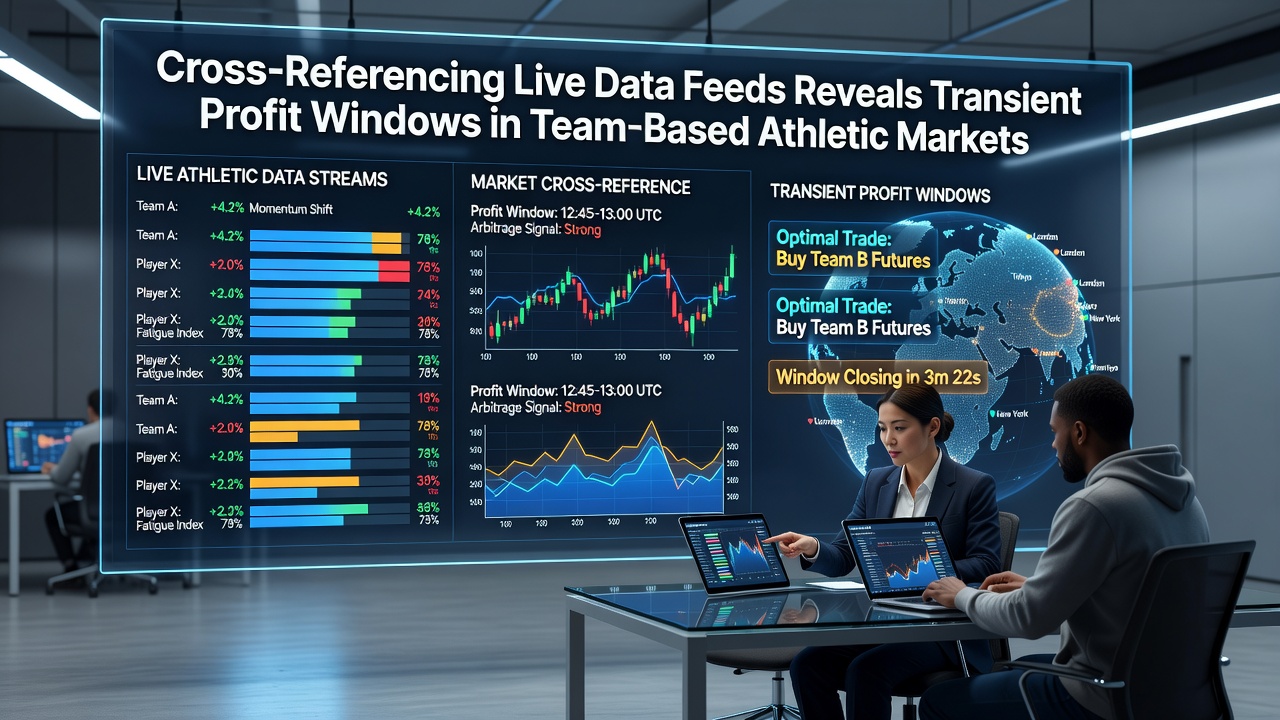
Cross-Referencing Live Data Feeds Reveals Transient Profit Windows in Team-Based Athletic Markets
Cross-referencing live data feeds has emerged as a technique that identifies brief profit opportunities in team-based athletic markets where odds from different providers diverge for short intervals during matches. These windows open when real-time statistics from games such as American football and baseball update faster than bookmakers adjust their lines, creating temporary imbalances that automated systems detect through simultaneous queries across several sources. Observers note that such discrepancies often last between five and forty seconds before market corrections occur, and data aggregation platforms compile feeds from stadium sensors, player tracking systems, and betting exchanges to flag these moments.
Mechanics of Multi-Source Data Integration
Operators pull information from proprietary APIs that deliver play-by-play updates, injury reports, and weather conditions while simultaneously monitoring exchange prices on platforms that allow peer-to-peer wagers. When one feed reports a quarterback injury during an NFL contest and another shows unchanged spread odds elsewhere, the mismatch registers as a potential entry point. Software routines compare these inputs every few hundred milliseconds, applying filters that exclude stale data and prioritize feeds with the lowest latency. Research from sports analytics groups shows that baseball markets, with their high volume of discrete events like pitch outcomes and base steals, generate more frequent but smaller windows than football, where scoring plays produce larger but rarer shifts.
Role of Timestamp Synchronization
Accurate synchronization across feeds relies on atomic clock references embedded in data packets, which prevents false positives caused by delayed transmissions. Teams that process these synchronized streams report higher detection rates during evening games when betting volume peaks and liquidity thins on less popular side markets such as total bases or player props. In June 2026, several major league baseball series coincided with international fixtures, producing elevated cross-market activity as bettors moved capital between domestic and overseas books.
Examples from Gridiron and Diamond Sports
One documented sequence during a 2026 regular-season football game involved a sudden change in weather data that altered over-under totals on one exchange while the primary bookmaker retained pre-game lines for an additional twelve seconds. Systems that combined radar feeds with betting APIs executed offsetting positions before the adjustment propagated. Similar patterns appear in baseball when bullpen movements occur between innings and live lines on run totals lag by a few points. These instances illustrate how team-based athletic markets differ from individual sports because collective player performance creates clustered data events rather than continuous individual scoring.
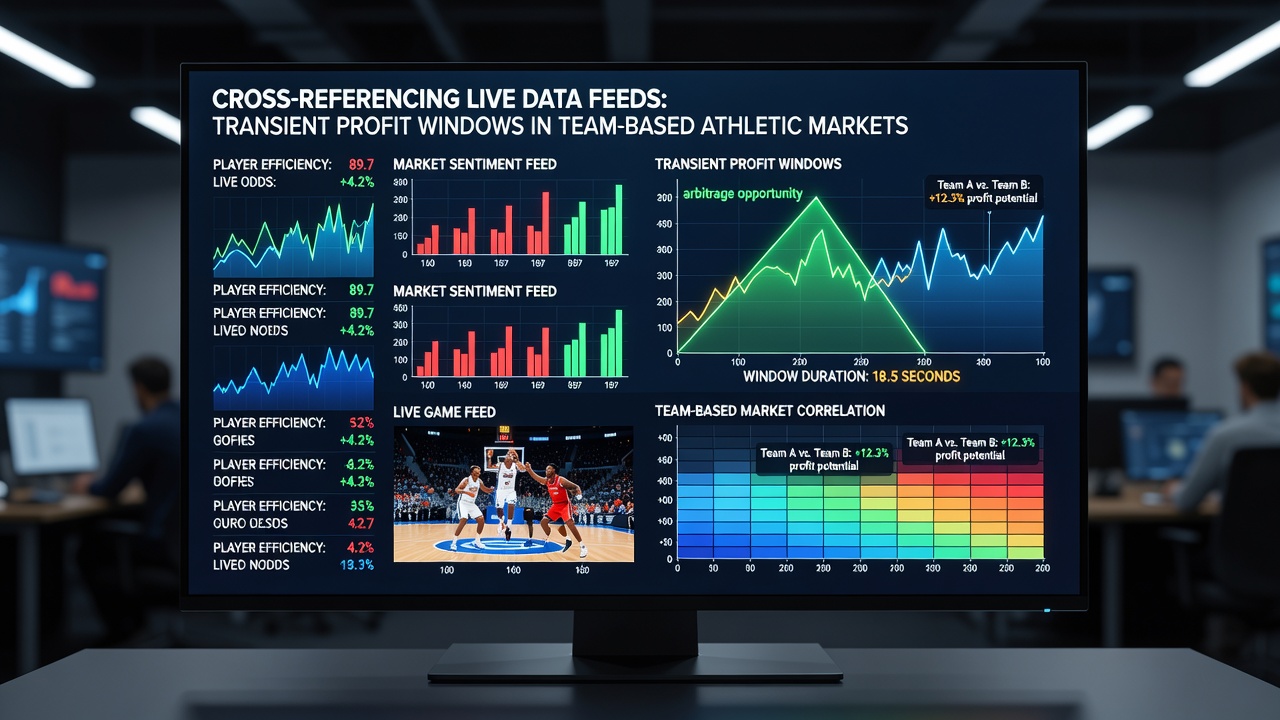
Industry reports compiled by the European Gaming and Betting Association highlight that multi-feed monitoring tools now account for a measurable share of activity in North American markets, with volumes rising alongside the expansion of legalized mobile wagering. Data from the National Council on Problem Gambling further indicates that participants using automated cross-referencing systems tend to place smaller, more frequent stakes compared with manual bettors, which aligns with the narrow margins these windows typically offer.
Technical Infrastructure and Latency Factors
Successful identification depends on co-located servers positioned near major data centers and direct fiber connections to both sports leagues and betting venues. Packet loss or routing delays can erase an edge within milliseconds, so operators maintain redundant paths and failover protocols. During peak periods in June 2026, when multiple overlapping seasons increased data throughput, firms documented average window durations shortening by roughly fifteen percent compared with off-peak months. This compression reflects greater competition among participants rather than any change in underlying game dynamics.
Market Impact and Regulatory Context
Regulatory bodies in several jurisdictions require operators to maintain audit logs of automated trading activity, which includes timestamps of each data query and resulting position. These records help distinguish legitimate arbitrage from prohibited practices such as latency exploitation through unauthorized access. The transient nature of the opportunities means that positions must close rapidly, often within the same game segment, to realize gains before correlated markets realign.
Conclusion
Cross-referencing live data feeds continues to surface short-duration profit windows in team-based athletic markets through systematic comparison of statistical and pricing streams. The approach relies on low-latency infrastructure, precise timestamp alignment, and disciplined risk controls that account for execution slippage. As leagues expand sensor coverage and betting platforms increase live market depth, the frequency and characteristics of these windows evolve, yet the core mechanism of identifying temporary discrepancies remains unchanged. Observers tracking developments through 2026 have recorded consistent patterns across American football and baseball, underscoring the ongoing role of integrated data analysis in these environments.