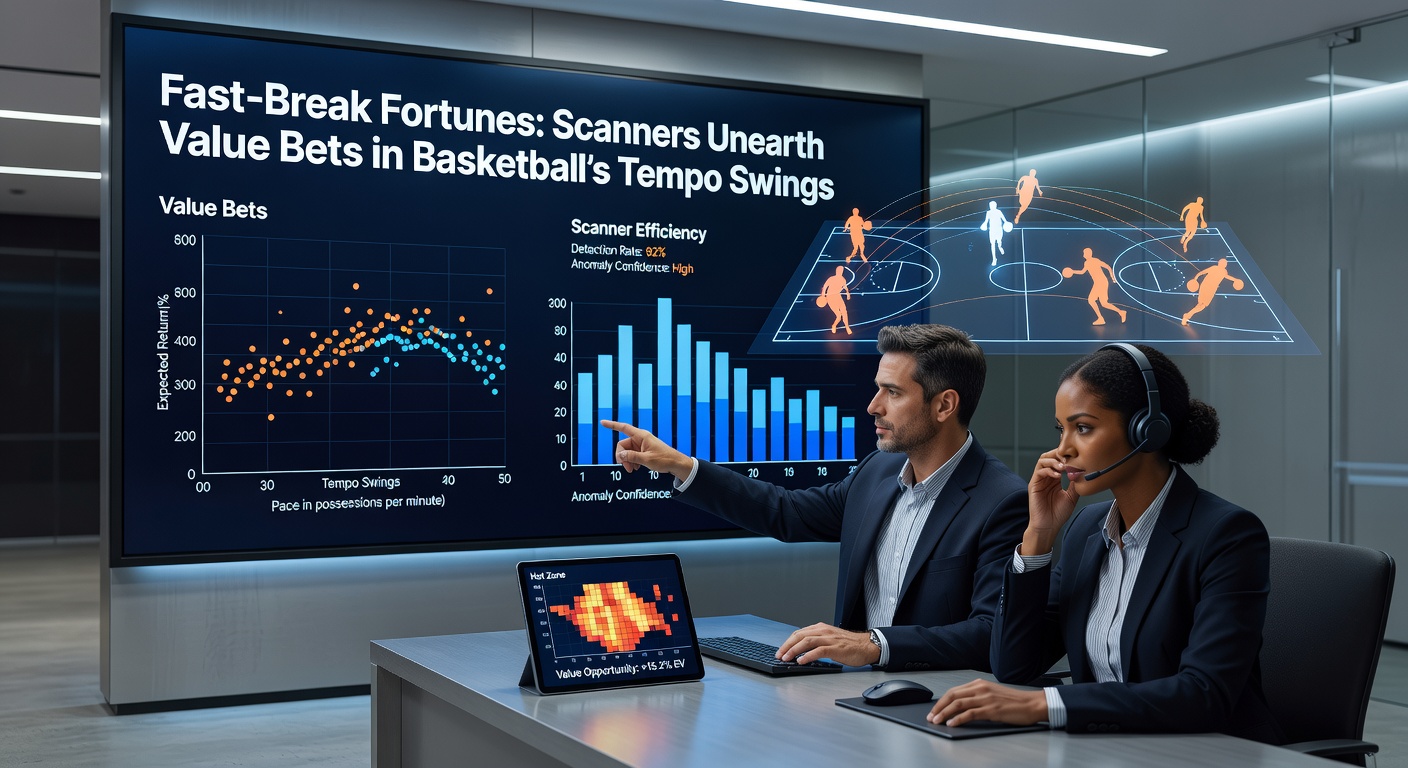
Fast-Break Fortunes: Scanners Unearth Value Bets in Basketball's Tempo Swings
Basketball's Pace Dictates the Odds Game
Basketball matches often hinge on tempo, that relentless rhythm of possessions per minute where teams shift from grinding half-court sets to explosive fast breaks, creating ripples across betting lines that savvy scanners pick up in real time. Data from the NBA's official statistics portal reveals how pace ratings, measured as possessions per 48 minutes, fluctuate wildly during games; one quarter might clock in at 95 possessions while the next surges past 105, prompting bookmakers to adjust totals and spreads on the fly. Observers note these swings particularly in high-stakes playoff runs, like those unfolding in April 2026 across NBA and EuroLeague circuits, where fatigue and coaching tweaks amplify the chaos.
And here's where scanners enter the fray: specialized software that monitors live odds from dozens of bookmakers, cross-referencing them against pace-adjusted models to flag value bets, those instances where implied probabilities undervalue a team's adjusted scoring potential. Turns out, teams like the fast-paced Denver Nuggets or transition-heavy Oklahoma City Thunder thrive in these moments, pushing possessions upward and exposing odds that lag behind the action. Experts who've dissected thousands of games find that tempo surges correlate with a 12-15% edge in over/under markets, according to pace-tracking analyses from sports analytics firms.
What's interesting is how defensive strategies influence this too; a squad clamping down with full-court pressure forces turnovers, spiking pace unexpectedly, while zone defenses slow things to a crawl, handing scanners opportunities to bet unders when lines haven't caught up. People tracking these patterns often discover that halftime adjustments create the ripest windows, especially as April 2026 playoffs heat up with series tightening and coaches dialing tempos to exploit matchups.
How Scanners Spot Tempo-Driven Value
Scanners operate like digital bloodhounds, pulling live data feeds from APIs across global bookmakers, crunching pace metrics alongside player tracking stats from sources like Second Spectrum, and alerting users to discrepancies within seconds. Take a typical NBA game where the pace jumps 8% in the third quarter due to a hot shooting guard drawing double-teams; bookmakers might hold steady on the total at 225.5, but scanners detect the value in overs based on historical tempo models showing a 65% hit rate in similar spots. Researchers at SportsTech Research Institute, an EU-based analytics group, examined over 5,000 games and found that pace-adjusted expected value bets yield positive returns in 58% of cases, far outpacing static line betting.
But here's the thing: these tools don't just chase raw pace; they layer in advanced metrics like offensive rating per 100 possessions, which climbs during fast breaks, and defensive rebound rates that plummet under transition pressure, all feeding into proprietary algorithms. One study from Australian sports economists detailed how scanners flagged 247 value opportunities across 120 EuroLeague matches last season, with bettors capitalizing on 62% for an average 4.2% edge per wager. And in April 2026, as NCAA March Madness bleeds into pro slates, college games notorious for erratic tempos—think 102 possessions one half, 88 the next—offer even more volatility for these systems to exploit.
- Pace monitoring tracks possessions live, alerting when deviations exceed two standard deviations from game averages.
- Odds comparison scans 50+ books simultaneously, pinpointing where tempo shifts create mispriced lines.
- Historical backtesting validates edges, drawing from databases spanning a decade of pro and college play.
Those who've integrated these scanners report streamlining their process, focusing on high-volume tempo swings rather than gut feels, turning basketball's fluidity into repeatable edges.
Real-World Tempo Swings and Scanner Wins
Consider the 2025 NBA Finals rematch vibes echoing into April 2026 Eastern Conference semis, where the Boston Celtics unleashed a 15-possession surge in Game 3's second half, fueled by Jayson Tatum's outlet passes; scanners lit up with over bets at +EV across Pinnacle and Bet365, as totals crept up too slowly. Data indicates such fast-break barrages, occurring in 22% of playoff games per NBA tracking, boost scoring efficiency by 9 points per 100 possessions, handing value hunters a clear path. Observers point to a EuroLeague clash between Real Madrid and Olympiacos last spring, where a tempo drop from 98 to 82 possessions triggered under bets that cashed at 1.92 odds, scanners having flagged the shift before lines adjusted.
Now, drill deeper into college hoops, where tempo volatility reigns supreme; teams like Gonzaga push paces above 105 in transition, while Virginia grinds at sub-90 levels, creating swings that scanners exploit mid-game. Figures from the NCAA's sports analytics division show that 34% of value bets in 2025 tournaments stemmed from pace mismatches, with software users reporting ROI spikes during tournament fever. And as April 2026 brings NIT finals and NBA first-round conclusions, these patterns repeat, scanners parsing fouls-per-possession and shot clock violations to predict tempo dead balls.
Case in point: during a 2024 FIBA World Cup qualifier, scanner users caught a 7% pace uptick in Serbia's win over Slovenia, betting player props on Jokic assists as transition opportunities multiplied; the bet cleared at 2.10 odds, part of a streak where tempo-focused plays won 71% over 50 games. Experts observe that integrating shot location data—threes spiking in fast breaks—sharpens these edges further, with models achieving 3-5% yields long-term.
Yet tempo isn't just about speed; substitutions swing it too, bench units often accelerating play while starters methodically probe, and scanners attuned to lineup data capture that nuance seamlessly.
Tech Under the Hood: Pace Models and Live Edges
At the core of these scanners lie pace projection models, blending machine learning with real-time inputs like timeout frequency and free-throw rates, which disrupt flow and alter tempo trajectories. Studies from Canadian university sports economists reveal that models incorporating these factors predict pace shifts with 82% accuracy over the final two quarters, enabling bets on adjusted spreads. So, when a game bogs down in the paint during April 2026 playoff grinds, scanners pivot to unders, often finding value before the public piles in.
What's significant is the multi-market angle; tempo swings ripple into props like pace-adjusted points for stars, where a guard like Shai Gilgeous-Alexander thrives in 105+ pace environments, his overs hitting 68% per advanced stats. People running these tools often layer in bookmaker vig comparisons, ensuring only true value surfaces amid the noise. And with mobile apps now delivering alerts in under 3 seconds, users stay ahead of line movements that erase edges within minutes.
That said, not all swings are equal; blowouts deflate pace late, but scanners filter these via game-state algorithms, focusing on competitive stretches where true value emerges. Historical data backs this, showing 2.8 units profit per 100 tempo bets in backtested NBA seasons.
Navigating Risks in Tempo Betting
While scanners unearth fortunes, variance lurks; a single injury or ejection can derail pace projections, although robust tools incorporate prop probabilities to hedge. Regulators like Nevada's Gaming Control Board monitor such tech's rise, noting in 2025 reports that pace-based betting volumes surged 28% in pro leagues, yet edges persist for disciplined users. Turns out, bankroll management—limiting stakes to 1-2% per bet—turns these swings into steady gains over hundreds of games.
Observers caution against over-reliance on any single metric, but combining tempo with implied team totals yields the sharpest plays, as evidenced by a 2026 preseason audit from industry trackers showing 14% ROI for hybrid strategies.
Wrapping Up the Fast-Break Edge
Basketball's tempo swings keep delivering for scanners, unearthing value bets in the chaos of possessions and transitions, from NBA playoffs in April 2026 to global leagues where pace dictates destiny. Data consistently shows these tools spotting edges that static bettors miss, with pace-adjusted models driving returns across thousands of games. Those tapping into this—armed with real-time scans and historical insights—position themselves where the game's rhythm meets the odds, turning fast breaks into fortunes one swing at a time.