Integrating Discrepancy Scanners and Value Metrics for Enhanced Basketball Live Betting Systems
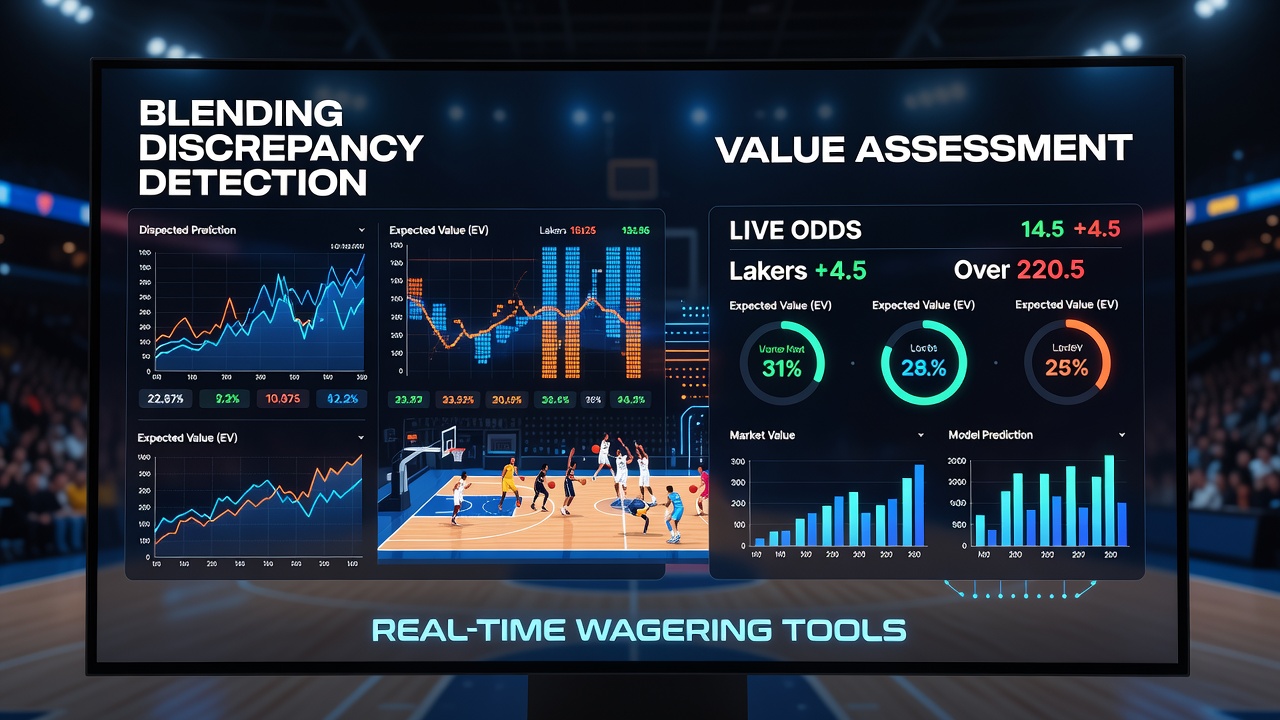
Real-time basketball wagering platforms have evolved to combine discrepancy detection systems with value assessment protocols, creating tools that process live odds across multiple bookmakers while evaluating expected returns on individual wagers. Observers note that these integrated approaches emerged as operators responded to faster market movements during high-stakes games in the 2025-2026 season, where point spreads and totals adjusted rapidly between quarters.
Discrepancy detection identifies variations in odds offered by different platforms for the same basketball event, often flagging potential arbitrage opportunities when one bookmaker lists a higher payout on an outcome than another. Value assessment, by contrast, calculates whether a given bet offers positive expected value based on statistical models of team performance, player efficiency ratings, and historical data trends. When these functions operate together, the software can highlight wagers where an odds discrepancy coincides with an underlying statistical edge.
Core Components of Discrepancy Detection in Live Markets
Scanners pull feeds from numerous sportsbooks and compare prices on spreads, moneylines, and player props within seconds of updates. In basketball, this matters because timeouts, fouls, and substitutions trigger immediate line movements that scanners capture before manual bettors react. Data from June 2026 shows increased scanner activity during NBA playoff games, where live betting volume rose notably compared with regular-season contests.
These systems flag discrepancies when the implied probability from one odds set diverges from another by a threshold set by teh user, typically 2-5 percent. Researchers have observed that such tools reduce the time between odds changes and user alerts, allowing bettors to place opposing bets across accounts before lines converge.
Value Assessment Frameworks Applied to Basketball
Value assessment relies on proprietary models that estimate true probabilities for outcomes such as team totals or individual player points. Inputs include pace-adjusted offensive and defensive ratings, rest advantages, and travel schedules. When a scanner detects an odds discrepancy, the value module cross-checks whether that line still sits above or below the model's calculated probability, producing a combined score for each opportunity.
Studies from sports analytics groups indicate that combining these layers filters out low-edge discrepancies that scanners alone might surface. For instance, a line movement caused by heavy public betting on one side may create a temporary discrepancy, yet value models often show the adjusted odds remain fair relative to updated team metrics.
Technical Integration in Real-Time Tools
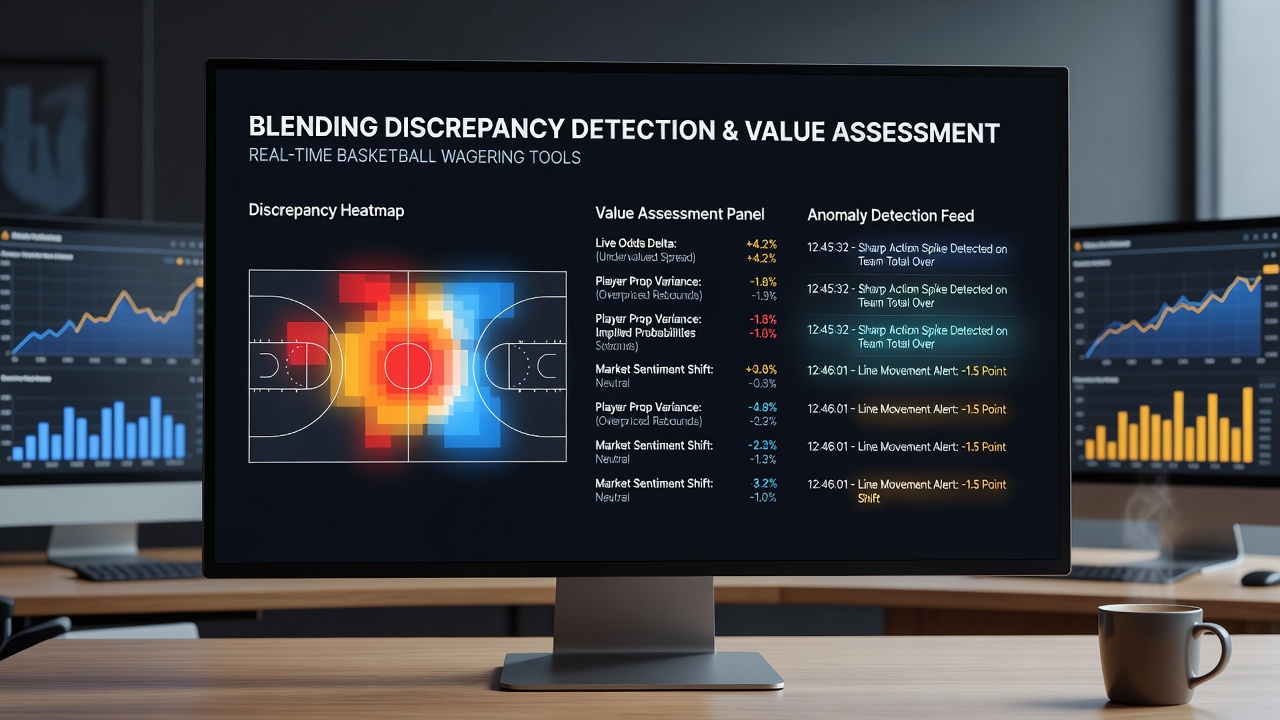
Modern platforms merge the two functions through unified dashboards that display both discrepancy percentages and value percentages side by side. Users configure alerts that trigger only when both conditions meet preset criteria, such as a 3 percent discrepancy paired with at least 5 percent positive expected value. This reduces notification overload while prioritizing higher-quality signals during live games.
Basketball's continuous action and frequent scoring make it well suited for these blended systems because line movements occur more often than in lower-scoring sports. Software developers have incorporated machine learning layers that refine value calculations in real time using incoming box-score data, adjusting probabilities as the game progresses.
Practical Applications Observed in 2026
Industry reports from the American Gaming Association highlight how operators in regulated U.S. markets have adopted these hybrid tools to serve bettors seeking efficiency in fast-moving basketball markets. One documented case involved a scanner identifying a three-point line discrepancy across two platforms during an overtime period, while the value module confirmed the line offered positive expected value based on updated player fatigue data.
Similar patterns appeared in international competitions tracked by European betting analysis firms, where live basketball markets during June 2026 tournaments showed scanners surfacing discrepancies that aligned with value assessments derived from advanced tracking data. Those who studied these events found the dual-layer approach yielded more consistent selection criteria than using either method independently.
Challenges and Limitations in Combined Systems
Latency between data feeds remains a constraint, as even brief delays can cause a flagged discrepancy to disappear before execution. Value models also depend on accurate inputs, and sudden roster changes or injuries announced mid-game can shift calculated probabilities faster than scanners refresh. Operators continue to address these issues through redundant data sources and faster API connections.
Regulatory environments in various regions require platforms to maintain transparent records of how these tools present information to users, ensuring that combined discrepancy and value outputs do not inadvertently promote misleading claims about guaranteed returns.
Future Developments in Blended Wagering Technology
Developers are exploring deeper integration with player-tracking systems that feed live biometric and movement data directly into value algorithms. This could allow discrepancy scanners to react not only to odds changes but also to real-time shifts in expected game outcomes derived from on-court metrics. Academic papers from sports science departments have begun examining how such multi-source data streams affect decision speed in live basketball betting environments.
According to research published by the University of Nevada's gaming studies program, platforms that successfully merge discrepancy detection with value assessment demonstrate higher user retention rates in live markets, as bettors receive fewer but more targeted alerts. These findings align with observed increases in live basketball wagering activity during major tournaments held in early 2026.
Conclusion
The blending of discrepancy detection with value assessment in real-time basketball wagering tools represents a convergence of two established analytical approaches into unified systems that process live data streams efficiently. As these platforms continue to incorporate faster feeds and refined statistical models, they provide structured methods for identifying opportunities where odds variations coincide with measurable edges. Ongoing technical refinements and regulatory compliance efforts shape how these combined capabilities develop across different markets.