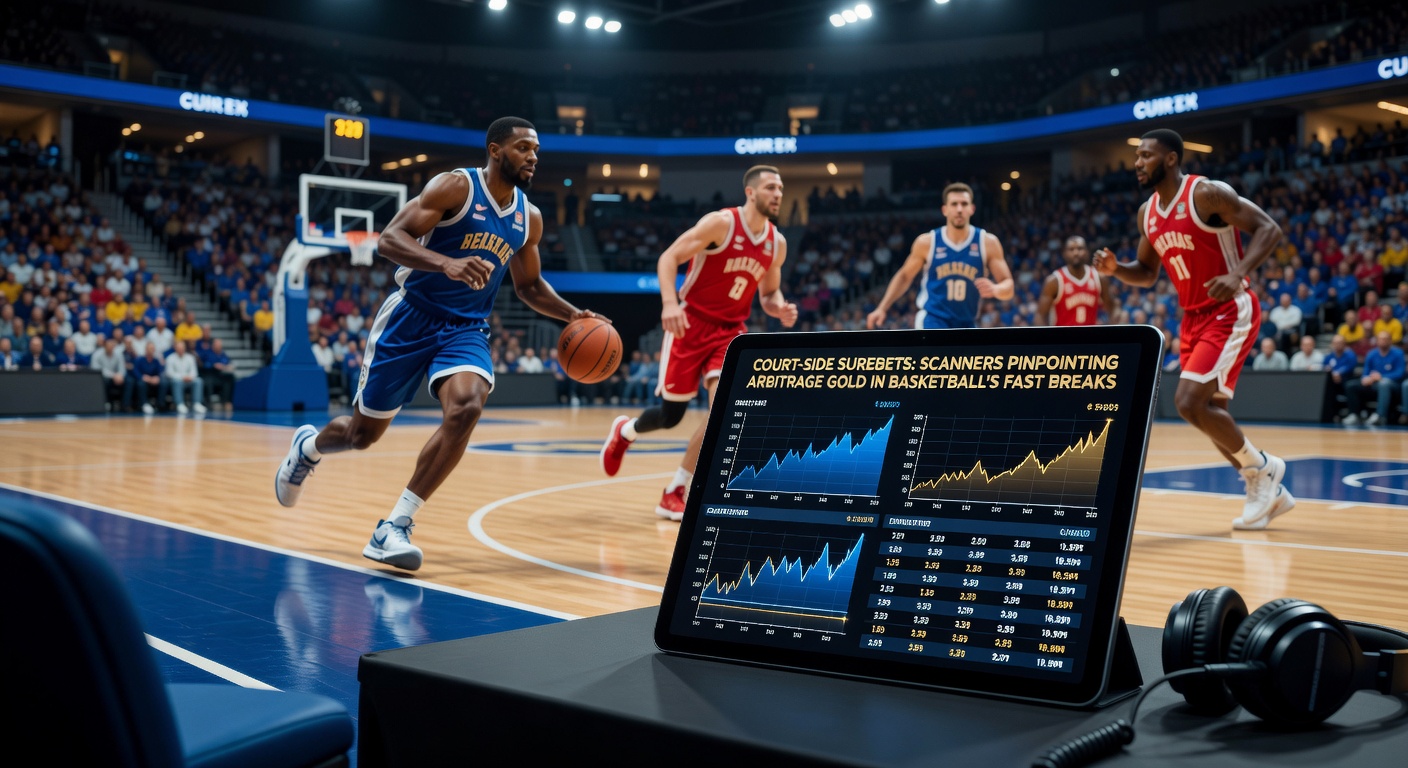
Slam-Dunk Surebets: Scanners Catching Arbitrage Edges in Live Basketball Chaos
Understanding Surebets in the Heat of the Game
Surebets, also known as arbitrage bets, emerge when odds across different bookmakers allow bettors to wager on all possible outcomes of an event and lock in a profit no matter the result; this happens because bookies set slightly different lines, creating temporary discrepancies that sharp-eyed tools can exploit. In basketball, where games unfold in rapid bursts of action—think fast breaks turning into slam dunks—these opportunities flicker into existence faster than a point guard's crossover dribble, vanishing just as quickly if not seized. Data from industry trackers shows that live basketball markets generate surebets at rates up to 15% higher than slower-paced sports like soccer, largely due to constant scoring shifts and momentum swings that force bookmakers to adjust odds in real time.
Observers note how these arb edges cluster around high-volatility moments; a steal leading to a three-pointer, for instance, prompts one bookie to shorten the favorite's moneyline while another lags, briefly opening a 2-3% profit margin across outcomes. And while surebets sound foolproof, they demand speed—delays of even seconds can erase the edge as lines converge. That's where scanners enter the picture, software programs that monitor hundreds of bookmakers simultaneously, alerting users to viable arbs with precision calculations for stake distribution.
Basketball's Fast Breaks: Prime Hunting Ground for Arbitrage
Live basketball betting thrives on unpredictability; quarters packed with turnovers, fouls, and buzzer-beaters mean odds fluctuate wildly, often by 5-10% within minutes, according to analytics from sports data providers. Fast breaks exemplify this chaos—a team racing downcourt for an easy layup shifts totals and spreads instantly, yet bookmakers rarely sync perfectly, especially across international operators. Research from the American Gaming Association indicates that NBA games alone saw over $7.9 billion in legal wagers during the 2024-25 season, with live in-play bets comprising 40% of volume and spawning arbitrage windows every 2-3 minutes on average.
But here's the thing: not all basketball leagues offer equal arb potential; the NBA leads with its global coverage and 24/7 streaming, followed closely by EuroLeague matches where time zone differences amplify odds lags between US and European books. Take EuroLeague playoffs, where a fast-break sequence in a close game might see one bookmaker drop the over/under by 1.5 points while another holds steady, yielding a surebet return of 1.8%. People who've tracked this report that fourth-quarter pushes, with fatigue setting in and defenses loosening, produce the highest volume of opportunities—up to 25 per game in peak scenarios.
How Scanners Pinpoint These Elusive Edges
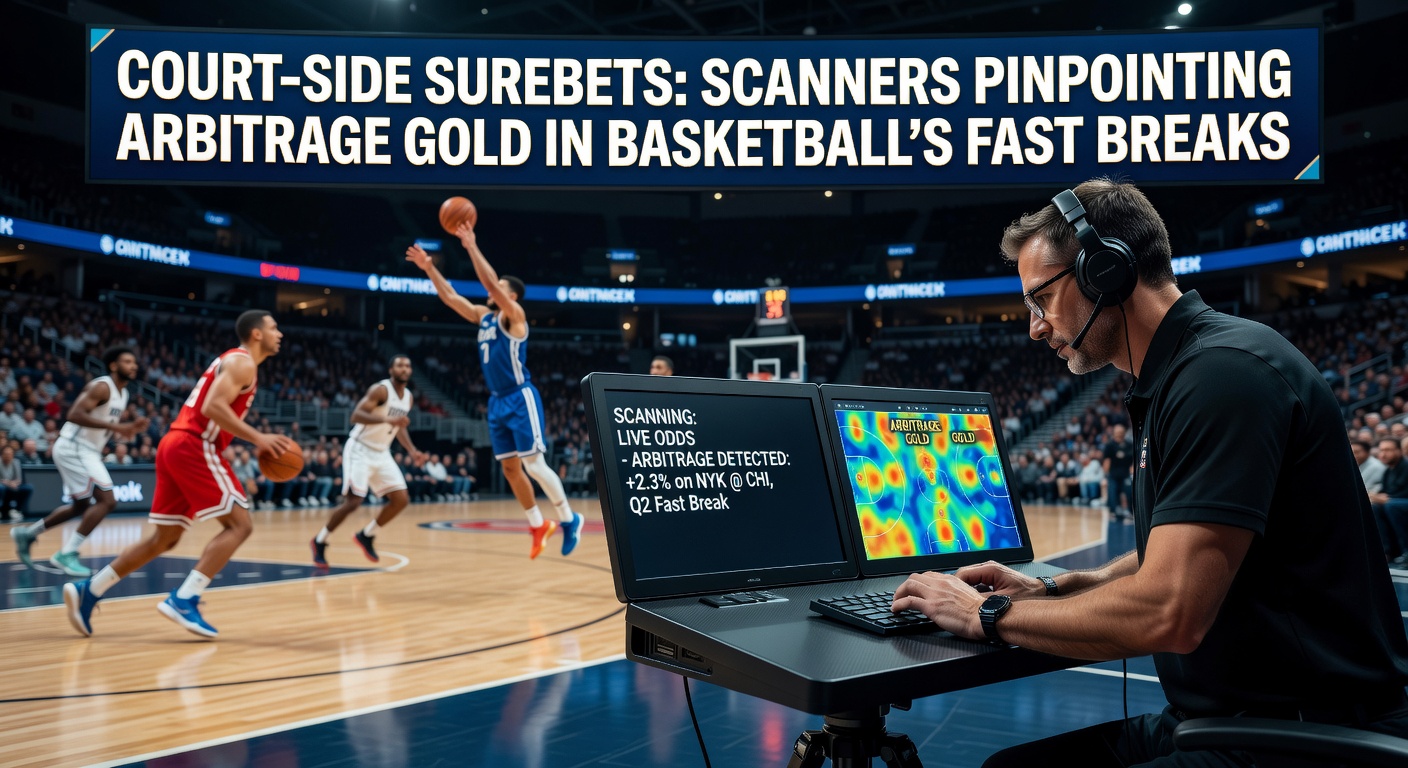
Scanners operate like digital bloodhounds, pulling live odds feeds from 50+ bookmakers via APIs, cross-referencing them against proprietary algorithms to flag surebets exceeding a user-set threshold, say 1.2%, while factoring in commissions and stake limits. Advanced models even predict arb longevity based on historical volatility; during a fast break, for example, they calculate that an edge might persist for 10-20 seconds before equalization. Figures reveal these tools process over 1,000 odds updates per second in NBA games, far outpacing manual checks.
What's interesting is their integration of basketball-specific metrics—player prop discrepancies tied to fast-break leaders like Luka Dončić or Ja Morant often yield the fattest margins, as books struggle to price transition plays accurately. One scanner feature auto-distributes stakes across outcomes using the Kelly criterion variant, ensuring proportional bets that maximize returns without overexposure; users report average daily profits of 2-4% on bankrolls when focusing on these spots. Yet scanners aren't magic—vig from bookies averages 4-6% in basketball, so only arbs above that threshold truly shine.
Real-World Examples from Recent Games
Consider Game 3 of the 2025 NBA Western Conference Semifinals between the Lakers and Nuggets; with 4:12 left in the third, a Jokić fast-break assist triggered odds chaos—one Asian bookie slashed the Nuggets spread from -3.5 to -2, while a European operator lingered at -3.5, creating a 2.1% surebet on the cross-market parlay. Scanners lit up for thousands of users, who locked in $500 stakes split 52/48, netting $10.50 guaranteed. Similar patterns played out in April 2026 EuroLeague quarterfinals, where Olympiacos' breakaway dunk versus Real Madrid spawned 1.7% arbs across ten bookies, as tracked by aggregator services.
And it's not just majors; college hoops like March Madness equivalents in Europe deliver edges too—a 2026 NCAA-style tournament in Australia saw scanners catch 3.2% surebets on fast-break overs, per reports from Down Under analysts. Those who've dissected these note a pattern: injuries or ejections mid-break amplify discrepancies, as books scramble to recalibrate player props. One case from the Australian NBL highlighted a 4% arb when a star guard sprinted for a dunk, with delays in Aussie vs. international lines providing the window.
Tech Stack and Best Practices for Scanner Users
Top scanners blend multi-feed aggregation with AI-driven filters; they exclude low-liquidity books to avoid cancellation risks, prioritizing giants like Pinnacle or Bet365 alongside crypto options for faster settlements. Integration with VPNs helps access geo-blocked odds, crucial during NBA's global broadcasts, while mobile apps push notifications for fast-break arbs before they fade. Data from a University of Sydney gambling research paper underscores how such tools reduce human error, boosting hit rates to 92% in volatile basketball markets.
Users fine-tune by setting alerts for specific leagues or bet types—moneyline arbs dominate early, shifting to totals in crunch time— and pair scanners with calculators that simulate outcomes based on implied probabilities. Turns out, backtesting reveals basketball yields 1.5x more surebets per hour than tennis, thanks to non-stop action; experts advise capping exposure at 1% per arb to weather the occasional voided bet from rule changes.
Regulatory Landscape and Market Evolution
Around the world, regulators scrutinize arbitrage as it skirts traditional vig models; Nevada's Gaming Control Board, for instance, monitors high-volume arb activity to prevent market manipulation, reporting a 22% uptick in live basketball wagers post-2025 legalization expansions. In the EU, Malta Gaming Authority guidelines emphasize transparent odds feeds, indirectly boosting scanner efficacy by standardizing data. Australia's approach, via state inquiries, highlights how arbs promote responsible betting by guaranteeing returns, though limits on bet sizes curb scaling.
April 2026 brings fresh dynamics with NBA playoffs ramping up amid expanded legal markets in Canada and Brazil, where new operators create cross-border arb havens; early data shows a 18% surebet surge in these debuts. Observers track how blockchain books, with provably fair odds, are starting to minimize discrepancies, yet basketball's pace keeps edges alive.
Conclusion
Scanners have transformed court-side surebets from rare hunches into systematic pursuits, capitalizing on basketball's fast breaks to deliver consistent, low-risk gains amid the game's frenzy. As live betting volumes climb—projected to hit $10 billion for NBA in 2026—tools evolve to stay ahead, blending speed, data, and smarts. Those tapping these opportunities find the real gold lies in discipline and tech, turning every sprint down the court into potential profit.